Male infertility is a common health concern that can affect couples who are trying to have a baby. It can occur due to problems with sperm production, sperm quality, sperm movement, or the passage of sperm through the reproductive system. In some cases, hormonal imbalances or difficulties with sexual function may also affect a man’s ability to conceive.
Many men feel uncomfortable discussing fertility problems, but male infertility is a medical condition that can often be evaluated and treated. Understanding the cause is the first step towards choosing the right treatment.
At Sundara Super Speciality Care, Belagavi, Karnataka, Dr. Amrut Phonde, MCh Urology, provides specialist consultation for male reproductive and urological conditions. Men experiencing difficulty conceiving can seek medical advice to understand the possible causes and available treatment options.
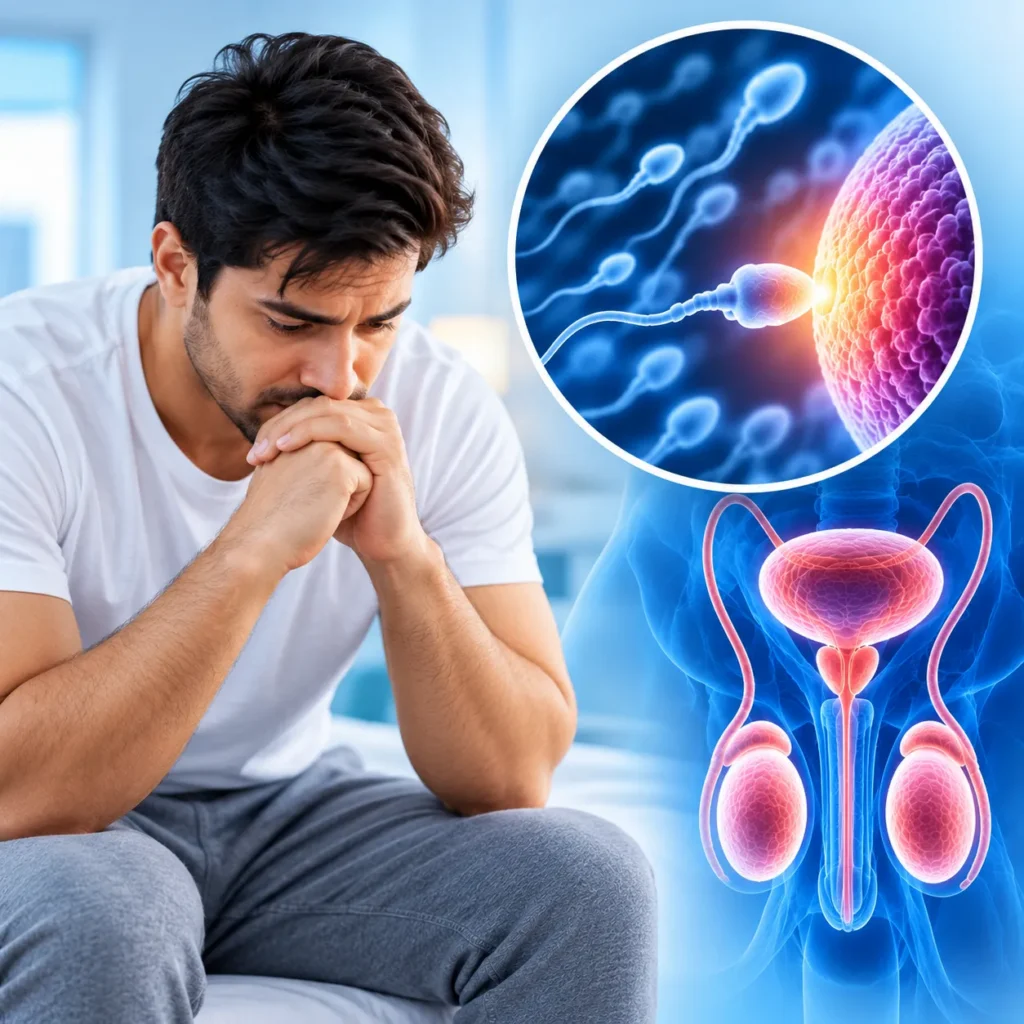
What Is Male Infertility?
Male infertility refers to a problem with the male reproductive system that reduces the chance of achieving a pregnancy with a partner. It may be related to a low sperm count, poor sperm movement, abnormal sperm shape, or a complete absence of sperm in the semen.
A couple may be experiencing infertility if pregnancy has not occurred after 12 months of regular, unprotected sexual intercourse. Medical evaluation may be recommended earlier when there are known fertility problems, risk factors, or when the female partner’s age makes timely assessment important.
Infertility is not always caused by one partner alone. Both partners may need evaluation to identify the factors affecting conception and determine the most appropriate treatment.
Common Causes of Male Infertility
Male infertility can develop for several reasons. Identifying the underlying cause helps doctors recommend suitable treatment.
1. Low Sperm Count
A low sperm count means that the semen contains fewer sperm than expected. With fewer sperm available to reach and fertilise an egg, the chance of conception may be reduced.
Low sperm count can be associated with hormonal problems, genetic conditions, certain illnesses, or damage to the testicles. In some men, the cause may remain unknown even after investigation.
2. Poor Sperm Movement
Sperm need to move effectively through the female reproductive tract to reach the egg. Poor sperm motility can make this process more difficult and may reduce the likelihood of natural conception.
A semen analysis helps assess sperm movement along with other important sperm characteristics.
3. Varicocele
A varicocele is an enlargement of the veins around the testicle. In some men, it can affect sperm production or quality and contribute to infertility.
Not every varicocele requires treatment. A urologist may recommend further evaluation when a varicocele is associated with infertility or other relevant symptoms.
4. Hormonal Imbalances
Hormones play an important role in sperm production. Problems involving testosterone or the hormones that regulate the testicles can interfere with normal sperm production.
Blood tests may be recommended when a hormonal cause is suspected. Treatment depends on the specific problem identified.
5. Blockage in the Reproductive Tract
In some men, sperm production is normal, but a blockage prevents sperm from entering the semen. This can occur due to previous infections, injuries, surgery, or certain congenital conditions.
Depending on the location and cause of the blockage, treatment may involve surgery or assisted reproductive techniques.
6. Lifestyle and Environmental Factors
Certain lifestyle and environmental factors may affect male fertility. These include smoking, excessive alcohol consumption, anabolic steroid use, exposure to some toxic substances, and prolonged or repeated exposure to excessive heat.
Obesity, poor general health, and some medications may also contribute to fertility problems. Making appropriate lifestyle changes can support reproductive health, although it may not resolve every cause of infertility.
7. Medical Conditions and Previous Treatments
Some infections, genetic conditions, testicular injuries, cancer treatments, and previous surgeries can affect sperm production or the movement of sperm. Sharing your complete medical history with your doctor can help identify these factors.
What Are the Symptoms of Male Infertility?
Male infertility often has no obvious symptoms. Some men discover the problem only when they undergo fertility testing.
However, certain signs may indicate an underlying condition that needs medical attention:
-
Difficulty achieving pregnancy with a partner.
-
Pain, swelling, or a lump in the testicle.
-
Reduced sexual desire.
-
Difficulty achieving or maintaining an erection.
-
Problems with ejaculation.
-
Noticeable changes in the testicles.
-
Symptoms that may suggest a hormonal problem, such as reduced body hair or other changes in sexual development.
These symptoms do not always mean that a man is infertile. However, persistent symptoms or difficulty conceiving should be evaluated by a qualified doctor.
How Is Male Infertility Diagnosed?
A proper diagnosis helps determine why conception may be difficult and which treatment options are likely to be useful. The evaluation generally begins with a medical history and physical examination.
1. Medical History and Physical Examination
The doctor may ask about the duration of infertility, previous illnesses, medications, surgeries, sexual health, and lifestyle habits. A physical examination may be performed to assess the testicles and reproductive system and look for conditions such as a varicocele.
2. Semen Analysis
Semen analysis is one of the main tests used to evaluate male fertility. It examines several characteristics of the semen, including:
-
Sperm concentration and total sperm count.
-
Sperm movement, also called motility.
-
Sperm shape, also called morphology.
-
Semen volume and other relevant parameters.
A single test may not provide the complete picture. Depending on the results, the doctor may recommend repeating the semen analysis.
3. Hormone Tests
Blood tests may be used to measure hormones such as testosterone and follicle-stimulating hormone (FSH). Other hormone tests may be recommended depending on the symptoms and initial findings.
These tests can help identify certain hormonal causes of reduced sperm production.
4. Ultrasound and Other Investigations
A scrotal ultrasound may be recommended when the examination suggests a structural problem or when further assessment is needed. Other investigations may include genetic testing, urine testing, or specialised reproductive tract investigations in selected patients.
Not every man requires all these tests. The investigations depend on the medical history, physical examination, and semen analysis results.
Male Infertility Treatment Options
The treatment for male infertility depends on the cause, the severity of the problem, the couple’s fertility goals, and the reproductive health of both partners. Some conditions can be treated directly, while others may require assisted reproductive techniques.
At Sundara Super Speciality Care, Dr. Amrut Phonde, MCh Urology, can help assess male reproductive health concerns and guide patients towards appropriate evaluation and management.
1. Lifestyle Changes
Lifestyle improvements may support sperm health, particularly when certain habits or health conditions contribute to the problem.
Helpful steps include:
-
Stop smoking and avoid tobacco products.
-
Limit or avoid alcohol, particularly excessive consumption.
-
Maintain a healthy weight through a balanced diet and regular physical activity.
-
Get adequate sleep and manage ongoing stress.
-
Avoid anabolic steroids and non-prescribed testosterone products.
-
Discuss medications or workplace exposures that may affect fertility with your doctor.
Sperm production takes time, so improvements may not be visible immediately. Lifestyle changes should be combined with medical evaluation when infertility is suspected.
2. Medical Treatment for Hormonal Problems
Some hormonal conditions can be treated with specific medicines that help restore the hormonal signals needed for sperm production. The treatment depends on the underlying diagnosis.
Testosterone replacement therapy should not be used as a fertility treatment for men trying to conceive. External testosterone can suppress sperm production and may significantly reduce sperm count.
Do not start fertility medicines, hormones, or supplements without medical advice.
3. Varicocele Treatment
When a varicocele is considered a contributing factor, treatment may be discussed if the clinical findings and fertility assessment support it. A procedure called varicocele repair can help selected men, although improvements in fertility are not guaranteed.
The decision depends on factors such as semen results, symptoms, and the couple’s overall fertility assessment.
4. Surgery to Correct Blockages
If sperm cannot enter the semen because of a blockage, surgery may be considered in suitable cases. The procedure depends on the location and cause of the obstruction.
When reconstruction is not possible or is unlikely to be successful, sperm retrieval combined with assisted reproductive techniques may be an alternative.
5. Assisted Reproductive Techniques
Some couples may benefit from assisted reproductive techniques when sperm count or quality is significantly reduced or when other treatments have not resulted in pregnancy.
Options may include:
-
Intrauterine insemination (IUI): Prepared sperm are placed inside the uterus around the time of ovulation. This is suitable only for selected fertility situations.
-
In vitro fertilisation (IVF): Eggs are fertilised with sperm in a laboratory, and an embryo is transferred to the uterus.
-
Intracytoplasmic sperm injection (ICSI): A single sperm is injected directly into an egg during IVF. This may be recommended for certain male-factor fertility problems.
-
Surgical sperm retrieval: Sperm may be collected directly from the reproductive tract in selected cases when sperm are absent from the semen.
The most appropriate option depends on the cause of infertility, sperm findings, the female partner’s fertility assessment, and the advice of the treating specialists.
Can Male Infertility Be Prevented?
Not all causes of male infertility can be prevented, particularly those related to genetics, certain medical conditions, or previous treatments. However, maintaining good overall health may help protect reproductive function.
Men can support their reproductive health by avoiding tobacco and anabolic steroids, limiting excessive alcohol consumption, maintaining a healthy weight, and seeking medical attention for testicular pain, swelling, or suspected infections.
If you are planning to have children and have concerns about fertility, an early consultation can help identify possible risk factors and guide the next steps.
When Should You Consult a Urologist?
Consider seeking medical advice if you and your partner have been trying to conceive for 12 months without success. Earlier evaluation may be appropriate if either partner has known fertility concerns or other risk factors.
You should also seek medical assessment if you have a history of undescended testicles, testicular injury, reproductive surgery, cancer treatment, or a previous diagnosis that may affect sperm production.
Sudden, severe testicular pain requires emergency medical attention.
A fertility evaluation is not about assigning blame. It is about understanding the medical factors affecting conception and finding the most suitable path forward for both partners.
Male Infertility Treatment at Sundara Super Speciality Care, Belagavi
If you are searching for male infertility treatment in Belagavi, Sundara Super Speciality Care provides specialist urology consultation for men experiencing reproductive and urinary health concerns.
Dr. Amrut Phonde, MCh Urology, helps patients understand possible causes of male infertility, the investigations needed for diagnosis, and the treatment options that may be appropriate for their condition.
Depending on the findings, management may involve lifestyle advice, further hormonal or reproductive evaluation, treatment of selected urological conditions, or referral for specialised fertility procedures when required.
Every patient has different medical needs. A personalised assessment helps ensure that treatment recommendations are based on the underlying cause, the couple’s fertility goals, and available clinical options.
Frequently Asked Questions
1. What is the most common cause of male infertility?
There is no single cause in every case. Male infertility may be associated with reduced sperm production, poor sperm movement, varicocele, hormonal problems, blockages, genetic conditions, or other medical factors. Some cases remain unexplained.
2. Can male infertility be treated?
Yes, some causes of male infertility can be treated with medicines, lifestyle changes, surgery, or treatment of an underlying medical condition. When natural conception remains difficult, assisted reproductive techniques may help selected couples.
3. Does a low sperm count mean a man cannot have children?
No. A low sperm count can reduce the chance of natural conception, but it does not always mean pregnancy is impossible. The overall semen analysis, the underlying cause, and both partners’ fertility health help determine the available options.
4. How long does male infertility treatment take?
The duration varies depending on the cause and treatment. Some conditions may respond to treatment within a few months, while surgery or assisted reproductive techniques may require additional time and planning.
5. Which doctor should I consult for male infertility?
A urologist with expertise in male reproductive health can evaluate many causes of male infertility. Depending on the diagnosis, a reproductive medicine or fertility specialist may also be involved in the treatment plan.
Book a Consultation
If you are experiencing difficulty conceiving or have concerns about your reproductive health, consult Dr. Amrut Phonde, MCh Urology, at Sundara Super Speciality Care, Belagavi, Karnataka.
Understanding the cause of male infertility is an important first step towards making informed decisions about treatment and family planning.
Clinic: Sundara Super Speciality Care
Consultation Location: Skinline Central Clinic, 1st Floor, Opp. BIMS College, Dr. Ambedkar Road, Belagavi, Karnataka
Consultation Timing: 6:00 PM to 8:00 PM
Consultation Location: Dept of urology, JNMC, KLES Dr. Prabhakar Kore Hospital & MRC, Nehru Nagar, Belagavi, Karnataka.
Consultation Timing: 9:00 AM to 5:00 PM
Medical disclaimer: This article is for general educational purposes and does not replace professional medical advice. Diagnosis and treatment should be based on an individual assessment by a qualified medical professional.