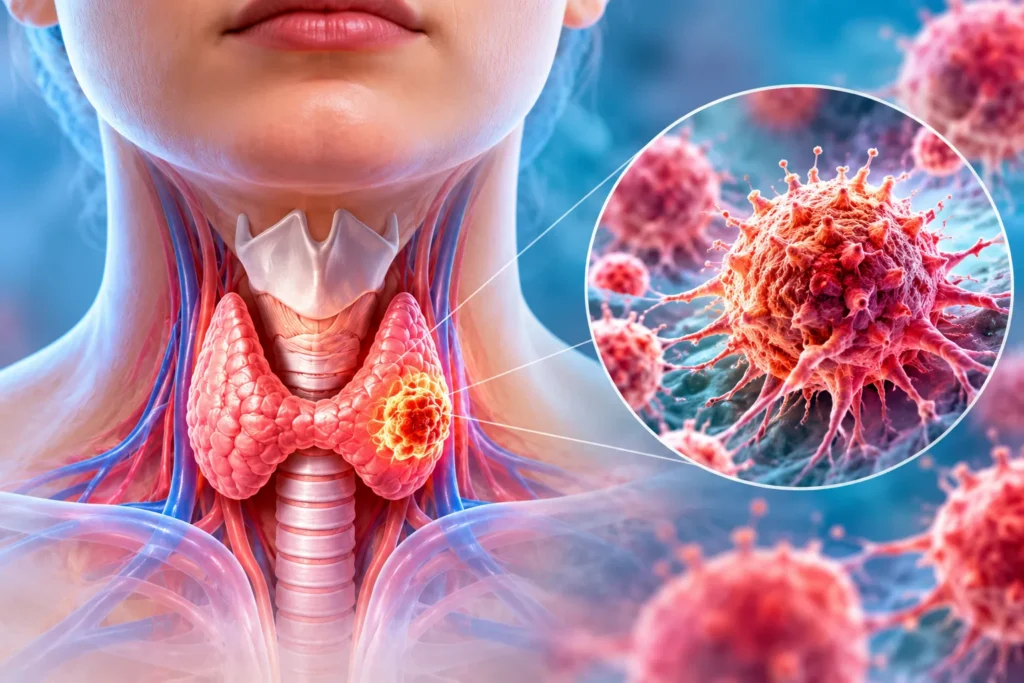
Thyroid cancer develops when abnormal cells grow in the thyroid gland, a small butterfly-shaped gland located at the front of the neck. The thyroid plays an important role in the body by producing hormones that regulate metabolism, energy levels, heart rate, and body temperature.
In its early stages, thyroid cancer may not cause noticeable symptoms. Some people discover it during a routine examination or when a lump is found in the neck. Although many thyroid nodules are non-cancerous, an unusual lump or persistent neck swelling should be evaluated by a qualified doctor.
With appropriate diagnosis and treatment, many types of thyroid cancer can be managed successfully, particularly when detected early.
At Sundara Super Speciality Care, Belagavi, Karnataka, Dr. Khushbu Phonde, MCh Surgical Oncology (Oncosurgeon), provides specialist consultation for cancer-related concerns, including the assessment and surgical management of thyroid cancer, as clinically appropriate.
What Is Thyroid Cancer?
Thyroid cancer occurs when cells in the thyroid gland begin to grow abnormally and form a tumour. The thyroid is located at the base of the front of the neck, just below the voice box.
The thyroid produces hormones that help regulate several important body functions. When cancer develops in this gland, the treatment required depends on the type of cancer, its size, whether it has spread, and the patient’s overall health.
The main types of thyroid cancer include:
-
Papillary thyroid cancer: The most common type. It often grows slowly and can frequently be treated successfully.
-
Follicular thyroid cancer: Another differentiated thyroid cancer that can sometimes spread to distant organs, such as the lungs or bones.
-
Medullary thyroid cancer: Develops from the C cells of the thyroid, which produce calcitonin. Some cases are associated with inherited genetic conditions.
-
Anaplastic thyroid cancer: A rare, aggressive type that generally requires urgent specialist assessment and treatment.
Identifying the type of thyroid cancer is essential because each type may require a different treatment approach.
Early Symptoms of Thyroid Cancer
Thyroid cancer does not always cause symptoms in the beginning. When symptoms do occur, they may include the following warning signs.
1. A Lump in the Neck
A lump or swelling at the front of the neck is one of the most noticeable signs of a thyroid problem. It may be painless and become more noticeable over time.
Many thyroid nodules are benign, but a new or growing lump should be examined by a doctor.
2. Persistent Hoarseness or Voice Changes
A change in your voice that does not improve may sometimes occur when a thyroid tumour affects nearby structures, including the nerves that control the voice box.
Persistent hoarseness should be evaluated, especially when it occurs alongside a neck lump.
3. Difficulty Swallowing
A large thyroid nodule or tumour may press against nearby structures and make swallowing uncomfortable or difficult.
If swallowing problems persist or worsen, seek medical assessment.
4. Difficulty Breathing
In some cases, an enlarged thyroid or tumour can press against the windpipe and cause breathing difficulties.
Sudden or severe difficulty breathing requires emergency medical attention.
5. Swollen Lymph Nodes in the Neck
Thyroid cancer may sometimes spread to nearby lymph nodes, causing swelling or a lump in the neck.
Neck lumps can have many causes, including infections. A medical examination helps determine whether further testing is required.
6. Persistent Neck Discomfort
Some people experience pressure or discomfort in the front of the neck. This symptom alone does not mean cancer is present, but persistent or unexplained discomfort should be assessed.
It is important to remember that many thyroid cancers are discovered without any symptoms. Regular medical follow-up may be recommended for people with known thyroid nodules or other risk factors.
What Causes Thyroid Cancer?
The exact cause of thyroid cancer is not always known. However, certain factors can increase the risk of developing the disease.
1. Previous Radiation Exposure
Exposure to radiation involving the head or neck, particularly during childhood, can increase the risk of thyroid cancer.
2. Family History
Having close relatives with thyroid cancer may increase the risk, especially when the cancer is associated with an inherited genetic condition.
3. Genetic Conditions
Some inherited conditions are associated with particular types of thyroid cancer. For example, medullary thyroid cancer may be linked to changes in the RET gene.
Genetic counselling and testing may be recommended when the family history or diagnosis suggests an inherited risk.
4. Age and Other Factors
Thyroid cancer can occur at different ages. Some types are more common in particular age groups, and women are diagnosed with thyroid cancer more often than men.
Having a risk factor does not mean that you will develop thyroid cancer, and the disease can also occur in people without known risk factors.
How Is Thyroid Cancer Diagnosed?
An accurate diagnosis helps doctors determine whether a thyroid nodule is cancerous and select the most appropriate treatment.
1. Medical Examination
The doctor examines the thyroid gland and nearby lymph nodes and asks about symptoms, previous medical conditions, and family history.
2. Thyroid Ultrasound
Ultrasound uses sound waves to create images of the thyroid gland. It helps assess the size, shape, and appearance of thyroid nodules and nearby lymph nodes.
Certain ultrasound features may indicate that a nodule needs further investigation.
3. Fine-Needle Aspiration Biopsy
A fine-needle aspiration (FNA) biopsy involves collecting a small sample of cells from a thyroid nodule using a thin needle, often with ultrasound guidance.
The sample is examined in a laboratory to look for abnormal or cancerous cells. Not every thyroid nodule requires a biopsy. The decision depends on its size, ultrasound appearance, and clinical findings.
4. Blood Tests
Blood tests may measure thyroid-stimulating hormone (TSH) and other thyroid-related markers. These tests help assess thyroid function, although normal thyroid hormone levels do not rule out thyroid cancer.
For suspected or confirmed medullary thyroid cancer, calcitonin and other specialised investigations may be considered.
5. Additional Imaging and Investigations
Depending on the diagnosis, a doctor may recommend CT, MRI, or other imaging tests to assess the tumour and determine whether it has spread to nearby structures or distant organs.
The investigations required vary according to the suspected cancer type and the patient’s condition.
Thyroid Cancer Surgical Treatment Options
Surgery is an important treatment for many types of thyroid cancer. The appropriate procedure depends on the cancer type, tumour size, spread, and individual risk factors.
At Sundara Super Speciality Care, Dr. Khushbu Phonde, MCh Surgical Oncology (Oncosurgeon), can evaluate patients and discuss suitable treatment options based on their diagnosis.
1. Thyroid Lobectomy
A thyroid lobectomy involves removing one lobe of the thyroid gland. It may be suitable for selected patients with certain small, localised thyroid cancers.
The decision depends on the cancer type, tumour characteristics, and whether there is evidence of disease outside the affected lobe.
2. Total Thyroidectomy
A total thyroidectomy involves removing the entire thyroid gland. It may be recommended for selected cancers based on their size, type, spread, and risk of recurrence.
After the thyroid is removed completely, patients generally need lifelong thyroid hormone replacement medication to maintain normal hormone levels.
3. Lymph Node Surgery
If thyroid cancer has spread to lymph nodes in the neck, the surgeon may recommend removing affected lymph nodes.
The extent of lymph node surgery depends on the location and extent of the disease. It is not necessary for every patient with thyroid cancer.
4. Radioactive Iodine Treatment
Some patients with differentiated thyroid cancers may benefit from radioactive iodine treatment after surgery. It helps destroy remaining thyroid tissue or certain thyroid cancer cells that absorb iodine.
This treatment is not appropriate for every thyroid cancer type. Its use depends on the pathology findings and the patient’s risk of recurrence.
5. Thyroid Hormone Replacement and Follow-Up
After total thyroidectomy, thyroid hormone medication is usually required for life. The dose is adjusted through blood tests and medical follow-up.
Long-term monitoring may include thyroid function tests, thyroglobulin measurements for selected differentiated thyroid cancers, ultrasound examinations, and other investigations according to the type of cancer and treatment received.
What Are the Benefits of Early Diagnosis?
Early diagnosis can help doctors identify the type and extent of thyroid cancer and plan treatment before the disease progresses.
Potential benefits include:
-
A clearer understanding of the tumour and its characteristics.
-
The opportunity to consider appropriate treatment options.
-
Better planning for surgery and any additional treatment.
-
Timely management of problems affecting nearby structures.
-
A suitable follow-up plan to monitor recovery and possible recurrence.
The outlook varies depending on the type and stage of thyroid cancer. Many differentiated thyroid cancers have a favourable prognosis, while aggressive types require more intensive and urgent treatment.
Recovery After Thyroid Cancer Surgery
Recovery depends on the type of surgery performed, the extent of the disease, and the patient’s overall health.
After surgery, patients may experience temporary neck discomfort, mild swelling, or voice changes. Some patients require monitoring of calcium levels because the parathyroid glands, which help regulate calcium, are located near the thyroid.
Possible complications include bleeding, changes in voice due to nerve injury, and low calcium levels. Your surgeon will explain the risks relevant to your procedure.
Follow-up appointments are important to monitor recovery, review the final pathology report, adjust medications, and determine whether additional treatment is required.
When Should You Consult an Oncosurgeon?
You should seek medical evaluation if you notice a new or growing lump in the neck, persistent hoarseness, difficulty swallowing, or unexplained swelling in the neck.
A thyroid lump does not automatically mean cancer, but it should be assessed when it is new, growing, or associated with other symptoms.
If you have already been diagnosed with thyroid cancer, a specialist consultation can help you understand the diagnosis, available surgical options, and whether additional treatment may be needed.
Seek emergency medical care if you develop severe or sudden breathing difficulties.
Thyroid Cancer Consultation at Sundara Super Speciality Care, Belagavi
If you are searching for thyroid cancer evaluation or surgical treatment in Belagavi, Sundara Super Speciality Care provides specialist consultation for cancer-related conditions.
Dr. Khushbu Phonde, MCh Surgical Oncology (Oncosurgeon), helps patients understand their diagnosis, review investigation reports, and discuss appropriate treatment options for thyroid cancer.
Depending on the type and stage of the cancer, treatment may involve thyroid surgery, lymph node surgery, additional cancer treatment, and long-term follow-up. The recommended approach is based on the patient’s clinical findings and individual needs.
The aim is to provide clear information, support informed treatment decisions, and guide patients through the next steps in their care.
Frequently Asked Questions
1. What is the first sign of thyroid cancer?
A lump or swelling in the front of the neck is a common warning sign. Persistent hoarseness, difficulty swallowing, or swollen neck lymph nodes may also occur. Some thyroid cancers are detected before symptoms develop.
2. Is every thyroid nodule cancerous?
No. Most thyroid nodules are benign. Ultrasound and, when indicated, a fine-needle aspiration biopsy help determine whether further investigation or treatment is needed.
3. Can thyroid cancer be treated with surgery?
Yes. Surgery is a major treatment option for many thyroid cancers. Depending on the diagnosis, the surgeon may remove part or all of the thyroid gland and, when necessary, affected lymph nodes.
4. Will I need medication after thyroid cancer surgery?
Patients who undergo total thyroidectomy generally require lifelong thyroid hormone replacement medication. Some patients who have only one thyroid lobe removed may still produce enough hormones naturally, although follow-up blood tests are necessary.
5. Is thyroid cancer curable?
Many types of thyroid cancer, particularly differentiated cancers detected at an early stage, can be treated successfully. The outcome depends on the cancer type, stage, and response to treatment.
Book a Consultation with Dr. Khushbu Phonde
If you have noticed a neck lump, received an abnormal thyroid test result, or been diagnosed with thyroid cancer, seek specialist advice to understand your options.
Book a consultation with Dr. Khushbu Phonde, MCh Surgical Oncology (Oncosurgeon), at Sundara Super Speciality Care, Belagavi, Karnataka, for evaluation and guidance regarding thyroid cancer diagnosis and surgical treatment.
Clinic: Sundara Super Speciality Care
Consultation Location: Skinline Central Clinic, 1st Floor, Opp. BIMS College, Dr. Ambedkar Road, Belagavi, Karnataka
Consultation Timing: 6:00 PM to 8:00 PM
Consultation Location: Dept of urology, JNMC, KLES Dr. Prabhakar Kore Hospital & MRC, Nehru Nagar, Belagavi, Karnataka.
Consultation Timing: 9:00 AM to 5:00 PM
Medical disclaimer: This article is for general educational purposes and does not replace professional medical advice. Diagnosis and treatment should be based on an individual assessment by a qualified healthcare professional.