Kidney stones are a common urinary problem that can affect people of different age groups. They develop when minerals and salts in the urine form hard deposits inside the kidneys. Some kidney stones are small and pass naturally through urine, while others may cause severe pain and require medical treatment.
Understanding the symptoms, causes, and available treatment options can help you take timely action and reduce the risk of future kidney stones. If you are looking for kidney stone treatment in Belagavi, Sundara Super Speciality Care offers specialist consultation and guidance on suitable treatment options with Dr. Amrut Phonde, MCh Urology.
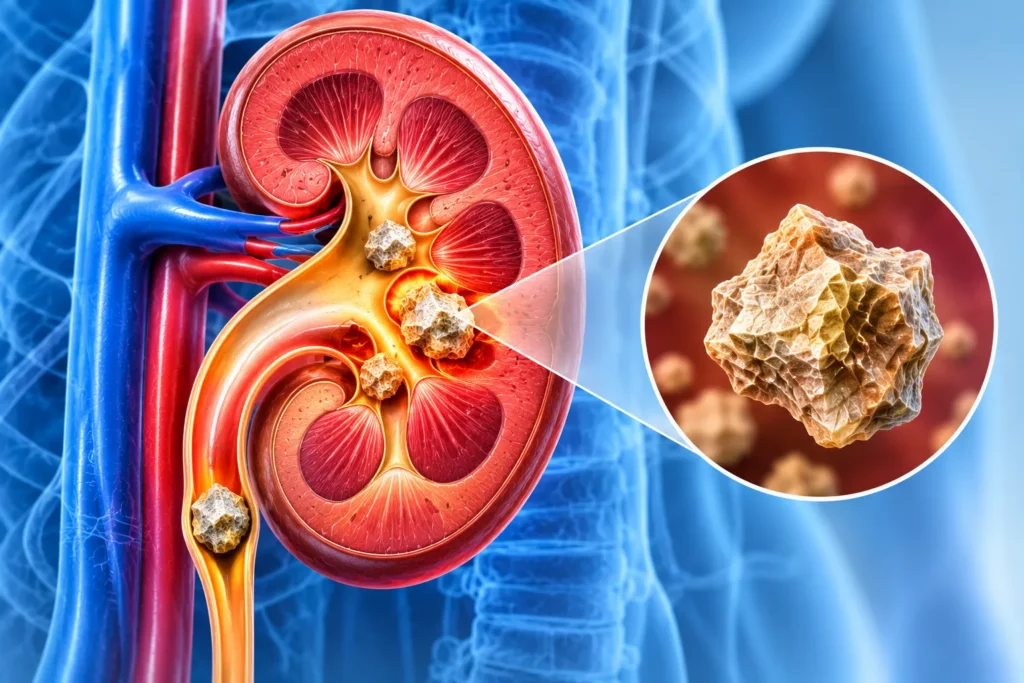
What Are Kidney Stones?
Kidney stones are hard, crystal-like deposits that form when certain substances in the urine, such as calcium, oxalate, and uric acid, become concentrated. These stones can develop in one or both kidneys and may move into the ureters, the tubes that carry urine from the kidneys to the bladder.
The size of a kidney stone can vary from a tiny grain to a larger stone that blocks the flow of urine. Small stones may pass without causing major problems, but larger stones can cause pain, bleeding, urinary obstruction, or infection. Early diagnosis helps doctors decide whether the stone can pass naturally or needs medical treatment.
Common Symptoms of Kidney Stones
Kidney stones do not always cause symptoms in the early stages. However, when a stone moves or blocks the urinary tract, it may cause noticeable discomfort.
Common symptoms include:
-
Severe pain in the back or side: Pain may occur below the ribs and can spread towards the lower abdomen or groin.
-
Pain while passing urine: A burning or painful sensation may occur during urination.
-
Blood in the urine: Urine may appear pink, red, or brown, although blood may also be visible only during testing.
-
Frequent urge to urinate: You may feel the need to urinate more often than usual, particularly when a stone is near the bladder.
-
Nausea and vomiting: Severe pain may be accompanied by nausea or vomiting.
-
Cloudy or foul-smelling urine: This may indicate a urinary infection, particularly when accompanied by other symptoms.
If you experience fever or chills along with kidney stone symptoms, seek urgent medical care. A stone blocking the urinary tract with an infection can become a serious condition.
What Causes Kidney Stones?
Kidney stones can develop due to several factors. In many cases, they form when urine contains high levels of certain minerals or does not contain enough fluid to keep these substances dissolved.
Some common causes and risk factors include:
1. Not Drinking Enough Water
Low water intake can make urine more concentrated, increasing the chances of crystal formation. People who sweat heavily or work in hot environments may have a higher risk if they do not replace lost fluids.
2. Dietary Habits
Eating too much salt can increase the amount of calcium in urine. A diet high in certain animal proteins may also increase the risk of some types of stones. The effect of diet depends on the type of stone and individual risk factors.
3. Family History
If kidney stones run in your family, you may have a higher chance of developing them.
4. Certain Medical Conditions
Conditions such as hyperparathyroidism, obesity, and some digestive disorders can increase the risk of kidney stones. Recurrent urinary infections can also contribute to certain types of stones.
5. Previous Kidney Stones
People who have had kidney stones before are more likely to develop them again. Identifying the stone type and underlying risk factors can help reduce recurrence.
How Can You Prevent Kidney Stones?
Although not all kidney stones can be prevented, simple lifestyle changes can help lower the risk.
-
Drink enough water: Maintain good hydration throughout the day. Your fluid needs may vary depending on your health, activity level, and climate.
-
Reduce excess salt: Limit highly salted packaged foods, processed snacks, and excessive salt in daily meals.
-
Maintain a balanced diet: Eat a variety of fruits, vegetables, and other nutritious foods. Do not eliminate calcium-rich foods without medical advice, as normal dietary calcium can help prevent some calcium oxalate stones.
-
Avoid excessive animal protein: Discuss your diet with a doctor if you have recurrent stones.
-
Follow medical advice: If you have had kidney stones previously, your doctor may recommend blood tests, urine tests, stone analysis, or dietary changes based on your individual risk.
Prevention is especially important for people who experience repeated kidney stones.
Kidney Stone Treatment Options
The right treatment depends on the size, location, type, and number of stones, as well as whether they are causing pain, infection, or blockage.
At Sundara Super Speciality Care, Belagavi, Dr. Amrut Phonde, MCh Urology, can assess the condition and guide patients towards an appropriate treatment plan.
1. Medical Management
Small kidney stones may pass naturally through urine. A doctor may recommend adequate fluid intake, suitable pain relief, and medicines that help certain stones pass more easily. Regular follow-up may be necessary to confirm that the stone has passed and that there is no obstruction.
2. Extracorporeal Shock Wave Lithotripsy (ESWL)
ESWL uses focused shock waves from outside the body to break a kidney stone into smaller fragments. These fragments can then pass through urine. This option is suitable for selected stones, depending on their size, location, and other clinical factors.
3. Ureteroscopy
During ureteroscopy, a thin instrument is passed through the urinary passage to reach a stone in the ureter or kidney. The stone may be removed or broken into smaller pieces, often using a laser. A temporary ureteral stent may be needed in some cases.
4. Laser Stone Surgery
Laser stone surgery is a minimally invasive treatment used to break stones into smaller fragments so they can be removed or passed through urine. In procedures such as ureteroscopy with laser lithotripsy, the surgeon reaches the stone through the natural urinary passage, avoiding an external incision.
Laser treatment may be suitable for selected kidney and ureteral stones. Its suitability depends on the stone’s size, location, and the patient’s overall condition. Your urologist can explain the expected benefits, risks, and recovery based on your diagnosis.
5. Percutaneous Nephrolithotomy (PCNL)
PCNL is commonly considered for large or complex kidney stones. The surgeon makes a small incision in the back to access the kidney and remove the stones using specialised instruments. It may be recommended when other treatments are unlikely to clear the stone effectively.
When Should You See a Urologist?
You should consult a urologist if you experience severe side or back pain, blood in your urine, recurring urinary discomfort, or symptoms that suggest a kidney stone. Seek urgent medical attention if you have fever, chills, persistent vomiting, difficulty passing urine, or severe pain that does not improve.
Even if a small stone causes little discomfort, medical evaluation may be important to confirm its size and location and check whether it is blocking urine flow.
Kidney Stone Treatment in Belagavi at Sundara Super Speciality Care
If you are searching for kidney stone treatment in Belagavi, Sundara Super Speciality Care provides specialist consultation for the evaluation and management of kidney and urinary stone problems.
Dr. Amrut Phonde, MCh Urology, helps patients understand their diagnosis and available treatment options, including medical management, endoscopic procedures, and laser stone surgery when clinically appropriate. The treatment plan is based on the patient’s symptoms, scan findings, stone characteristics, and overall health.
The aim is to select an appropriate treatment, manage discomfort, address possible complications, and help patients understand how to reduce the risk of future stones.
Frequently Asked Questions
1. Can kidney stones pass naturally?
Yes. Small kidney stones may pass naturally through urine. However, the time required and the likelihood of passing the stone depend on its size and location. Medical assessment helps determine whether observation is safe.
2. Is laser stone surgery painful?
Laser stone surgery is generally performed under anaesthesia, so patients should not feel pain during the procedure. Some people may experience temporary burning during urination, discomfort, or blood in the urine afterwards. Recovery varies from person to person.
3. How long does it take to recover from laser stone surgery?
Recovery depends on the procedure, stone burden, and the patient’s health. Many patients return to normal activities within a few days, but some need more time. A temporary ureteral stent may cause urinary discomfort until it is removed.
4. Can kidney stones come back after treatment?
Yes. Removing a kidney stone does not always prevent new stones from forming. Drinking enough water, following appropriate dietary advice, and addressing underlying risk factors can help reduce recurrence.
5. Which treatment is best for kidney stones?
There is no single treatment that is best for every patient. Small stones may pass naturally, while larger or obstructing stones may require laser treatment, ESWL, PCNL, or another procedure. A urologist can recommend the most suitable option after evaluation.
Book a Consultation
For expert guidance on kidney stone symptoms, diagnosis, prevention, and treatment options, consult Dr. Amrut Phonde, MCh Urology, at Sundara Super Speciality Care, Belagavi, Karnataka.
Getting the right diagnosis and treatment at the right time can help prevent complications and support better urinary health.
Clinic: Sundara Super Speciality Care
Consultation Location: Skinline Central Clinic, 1st Floor, Opp. BIMS College, Dr. Ambedkar Road, Belagavi, Karnataka
Consultation Timing: 6:00 PM to 8:00 PM
Consultation Location: Dept of urology, JNMC, KLES Dr. Prabhakar Kore Hospital & MRC, Nehru Nagar, Belagavi, Karnataka.
Consultation Timing: 9:00 AM to 5:00 PM
Medical note: This article is for general educational purposes and does not replace professional medical advice. Treatment decisions should be made after consultation with a qualified urologist.