Oral cancer is a type of cancer that develops in the mouth, including the lips, tongue, gums, inner cheeks, floor of the mouth, and roof of the mouth. It can affect everyday activities such as speaking, chewing, swallowing, and eating. Recognising the warning signs and seeking medical advice early can help with timely diagnosis and treatment.
Tobacco use, including chewing tobacco, gutka, khaini, and smoking, is an important risk factor for oral cancer. Excessive alcohol consumption can also increase the risk, particularly when combined with tobacco use. However, oral cancer can sometimes occur in people without these known risk factors.
If you notice a mouth ulcer that does not heal, a persistent red or white patch, or an unusual lump in your mouth, do not ignore it. A medical examination can help identify the cause and determine whether further tests are needed.
At Sundara Super Speciality Care, Belagavi, Karnataka, Dr. Khushbu Phonde, MCh Surgical Oncology (Oncosurgeon), provides specialist consultation for cancer-related concerns, including the assessment and surgical management of oral cancer, as clinically appropriate.
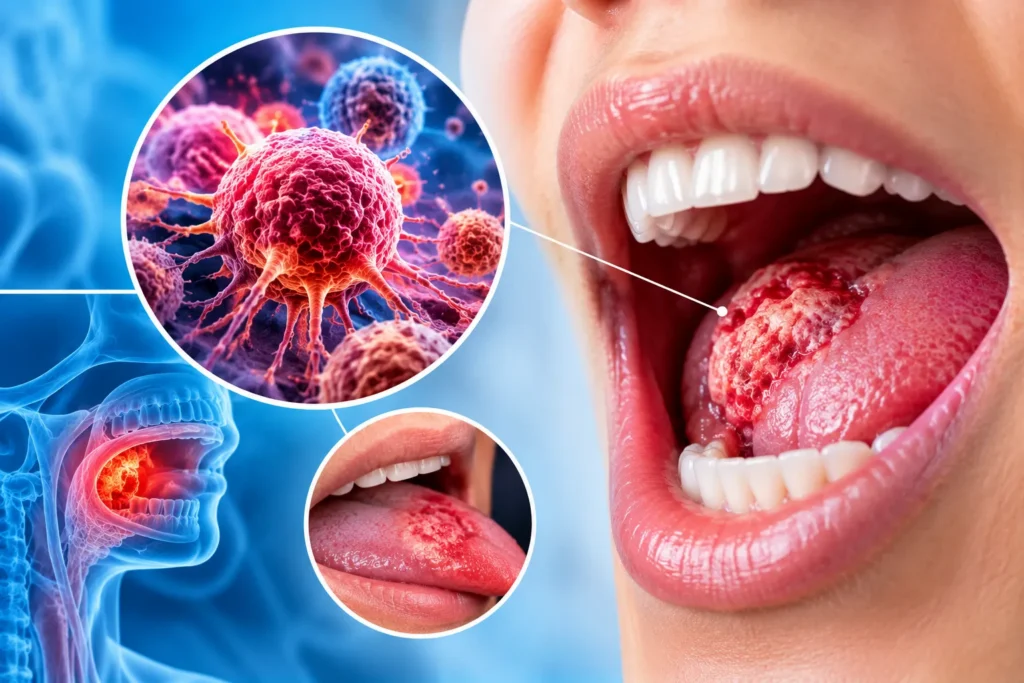
What Is Oral Cancer?
Oral cancer develops when abnormal cells grow uncontrollably in the tissues of the mouth. It commonly affects the lips, tongue, gums, inner lining of the cheeks, floor of the mouth, or roof of the mouth.
In many cases, oral cancer begins in the thin, flat cells lining the mouth. If it is not diagnosed and treated, it may grow into nearby tissues and, in some cases, spread to lymph nodes in the neck or other parts of the body.
Early oral cancer may not always cause severe pain. This is why it is important to pay attention to changes in the mouth that persist or appear unusual.
Oral Cancer Warning Signs You Should Never Ignore
Oral cancer can cause different symptoms depending on where it develops. The following warning signs should be checked by a qualified healthcare professional, especially if they persist for more than two weeks.
1. A Mouth Ulcer That Does Not Heal
Mouth ulcers are common and often heal on their own. However, a sore that does not heal within two weeks, keeps returning in the same area, or becomes larger needs medical evaluation.
Do not assume that every persistent ulcer is harmless, particularly if it is accompanied by other changes in the mouth.
2. Red or White Patches Inside the Mouth
Red patches, white patches, or patches with mixed red and white areas may sometimes indicate abnormal changes in the mouth lining.
These patches can have several causes, including irritation and other non-cancerous conditions. A dentist or doctor can examine the affected area and decide whether further investigation is necessary.
3. A Lump or Thickened Area in the Mouth
An unexplained lump, thickened area, or growth on the tongue, gums, inner cheek, or roof of the mouth should not be ignored.
If the lump persists, increases in size, or causes discomfort, arrange a medical assessment.
4. Difficulty Chewing or Swallowing
Oral cancer may cause discomfort or difficulty while chewing food or swallowing. You may also feel that food is getting stuck or that movement of the tongue has become restricted.
These symptoms can have other causes, but persistent difficulty with chewing or swallowing requires medical attention.
5. Persistent Pain in the Mouth
Ongoing pain in the mouth, tongue, or throat may be associated with several conditions. Pain that does not improve, particularly when accompanied by a sore, lump, or patch, should be evaluated.
Remember that oral cancer can also occur without significant pain.
6. Numbness in the Tongue or Mouth
Unexplained numbness or reduced sensation in the tongue, lips, or another part of the mouth may require further investigation, particularly when it persists or occurs alongside other unusual changes.
7. Unexplained Bleeding
Bleeding from the mouth without an obvious cause, such as an injury, should be assessed by a healthcare professional. Repeated bleeding from a persistent sore or growth needs particular attention.
8. A Lump in the Neck
Oral cancer can sometimes spread to lymph nodes in the neck, causing a lump or swelling. A persistent or unexplained neck lump should be examined, even if there is no obvious sore in the mouth.
9. Changes in the Voice or Speech
A change in speech, difficulty moving the tongue, or persistent changes in the voice may occur when a tumour affects nearby structures. These symptoms have many possible causes, but ongoing changes should not be ignored.
Important: These symptoms do not automatically mean that you have oral cancer. However, if a mouth sore, patch, lump, or other unusual change persists for two weeks or longer, seek medical evaluation without further delay.
What Causes Oral Cancer?
Oral cancer develops due to changes in the DNA of cells in the mouth. Several factors can increase the risk of these changes.
1. Tobacco Use
Tobacco is one of the major risk factors for oral cancer. Risk can increase with the use of cigarettes, bidis, chewing tobacco, gutka, khaini, and other smokeless tobacco products.
Keeping tobacco in contact with the mouth lining can expose the tissues to harmful substances that may contribute to cancer development.
2. Alcohol Consumption
Regular heavy alcohol consumption can increase the risk of oral cancer. The risk is particularly concerning when alcohol use is combined with tobacco use.
3. Areca Nut and Betel Quid
Areca nut, commonly used in preparations such as supari and some forms of paan, is associated with an increased risk of oral cancer. Tobacco-free preparations containing areca nut are not necessarily safe.
4. Previous Oral Conditions
Certain potentially malignant oral conditions, including some types of leukoplakia and oral submucous fibrosis, may increase the risk of developing oral cancer. White patches, restricted mouth opening, or persistent burning sensations should be assessed by a qualified professional.
5. Other Risk Factors
Increasing age and a history of certain oral conditions may also influence risk. Oral cancer can occur without an identifiable risk factor, so anyone with persistent warning signs should seek evaluation.
How Is Oral Cancer Diagnosed?
If oral cancer is suspected, the doctor may recommend several steps to identify the cause and determine whether cancer is present.
Clinical Examination
The doctor examines the lips, tongue, gums, inner cheeks, roof and floor of the mouth, and nearby areas. The neck may also be examined for enlarged lymph nodes.
Biopsy
A biopsy is an important test for confirming oral cancer. A small sample of tissue is collected from the suspicious area and examined under a microscope.
A biopsy helps determine whether cancer cells are present and may provide information about the type of cancer.
Imaging Tests
If cancer is confirmed or strongly suspected, imaging tests such as CT scans, MRI, or PET-CT may be recommended, depending on the situation. These tests help assess the extent of the disease and whether nearby structures or lymph nodes are involved.
Not every patient needs every test. The diagnostic plan depends on the examination findings and the doctor’s assessment.
Oral Cancer Treatment Options
Oral cancer treatment depends on the location, size, stage, and characteristics of the tumour, as well as the patient’s overall health.
1. Oral Cancer Surgery
Surgery is an important treatment option for many oral cancers. The surgeon removes the tumour along with an appropriate margin of surrounding tissue.
In some cases, surgery may also involve removing affected lymph nodes in the neck. If a large area of tissue must be removed, reconstructive surgery may be considered to help restore appearance and functions such as speaking and swallowing.
2. Radiation Therapy
Radiation therapy uses high-energy radiation to destroy cancer cells. It may be recommended after surgery when additional treatment is needed or used in selected cases as part of the primary treatment plan.
3. Chemotherapy
Chemotherapy uses medicines to destroy or control cancer cells. Depending on the stage and treatment plan, it may be combined with radiation therapy or used in other clinical situations.
4. Targeted Therapy and Immunotherapy
For selected patients, targeted medicines or immunotherapy may be considered, particularly in certain advanced or recurrent cases. Suitability depends on the cancer’s characteristics and the patient’s medical condition.
Treatment may involve a team of specialists, including a surgical oncologist, radiation oncologist, medical oncologist, dentist, and rehabilitation professionals.
How Can You Reduce the Risk of Oral Cancer?
Although not every case can be prevented, certain steps can reduce your risk and support better oral health.
-
Stop using tobacco in all forms, including gutka, khaini, cigarettes, and bidis.
-
Avoid areca nut and supari products.
-
Avoid or limit alcohol consumption.
-
Maintain good oral hygiene and attend regular dental check-ups.
-
Seek an examination for persistent mouth ulcers, patches, lumps, or unexplained pain.
-
Follow medical advice if you have been diagnosed with a potentially malignant oral condition.
Regular dental visits can help identify unusual changes, but they do not replace medical evaluation of persistent symptoms.
When Should You Consult an Oncosurgeon?
You should seek medical advice if you notice a mouth ulcer that does not heal, a persistent red or white patch, an unexplained lump, difficulty swallowing, restricted tongue movement, or a neck lump that does not go away.
People who use tobacco or areca nut should be particularly attentive to changes in their mouth. However, anyone can develop oral cancer, including people who do not use these products.
Do not wait for symptoms to become painful or severe before seeking medical attention. Early evaluation can help identify the cause and allow treatment planning to begin when necessary.
Oral Cancer Consultation at Sundara Super Speciality Care, Belagavi
If you are concerned about oral cancer symptoms or need a specialist evaluation, Sundara Super Speciality Care, Belagavi, Karnataka, offers consultation for cancer-related concerns.
Dr. Khushbu Phonde, MCh Surgical Oncology (Oncosurgeon), evaluates patients with suspected or diagnosed cancers and discusses appropriate investigations and treatment options. For oral cancer, management may involve surgery and, when indicated, additional treatment in coordination with other cancer specialists.
The recommended approach depends on the diagnosis, tumour location, disease stage, and the patient’s overall health. A specialist consultation can help you understand the next steps and make informed decisions about your care.
Frequently Asked Questions
1. What is the first warning sign of oral cancer?
A persistent mouth ulcer, a red or white patch, or an unexplained lump can be an early warning sign. Oral cancer does not always cause pain, so persistent changes should be examined.
2. How long should a mouth ulcer take to heal?
Many ordinary mouth ulcers heal within one to two weeks. If an ulcer persists for more than two weeks, becomes larger, or repeatedly returns in the same area, seek medical evaluation.
3. Can oral cancer develop from chewing tobacco?
Yes. Chewing tobacco, gutka, and other smokeless tobacco products are important risk factors for oral cancer. Areca nut and supari products can also increase the risk, even when they do not contain tobacco.
4. Is oral cancer treatable?
Oral cancer can be treated, and treatment outcomes are generally better when the disease is detected early. Depending on the diagnosis, treatment may include surgery, radiation therapy, chemotherapy, or a combination of approaches.
5. Which doctor should I consult for suspected oral cancer?
A dentist or doctor can assess an unusual mouth lesion and arrange further investigations. If cancer is suspected or confirmed, a surgical oncologist or an appropriate head and neck cancer specialist can guide diagnosis and treatment.
Book a Consultation with Dr. Khushbu Phonde
Do not ignore persistent changes in your mouth. Early medical evaluation can help identify the cause and determine whether further testing or treatment is required.
For specialist consultation regarding oral cancer, book an appointment with Dr. Khushbu Phonde, MCh Surgical Oncology (Oncosurgeon), at Sundara Super Speciality Care, Belagavi, Karnataka.
Clinic: Sundara Super Speciality Care
Consultation Location: Skinline Central Clinic, 1st Floor, Opp. BIMS College, Dr. Ambedkar Road, Belagavi, Karnataka
Consultation Timing: 6:00 PM to 8:00 PM
Consultation Location: Dept of urology, JNMC, KLES Dr. Prabhakar Kore Hospital & MRC, Nehru Nagar, Belagavi, Karnataka.
Consultation Timing: 9:00 AM to 5:00 PM
Medical disclaimer: This article is for general educational purposes and does not replace professional medical advice. A qualified healthcare professional should assess persistent oral symptoms and recommend appropriate investigations or treatment.